
Unless you spent the last year under a rock, you’ll be familiar with the popular TV show Euphoria, a high school drama focusing on the highs and lows of a group of teenagers, such as protagonist Rue Bennett, who struggles with addiction. But unlike other teen dramas such as the UK’s Sex Education or Ackley Bridge, Sam Levinson’s Euphoria was different in its film photography glamour. Euphoria started conversation with its glittery makeup, outrageous storylines and the abundance of violence and sex. Unlike Skins, which is also cited as a teen drama discussing addiction, relationships and sex, Euphoria is a show like no other, presenting these issues through picturesque film shots in which all of its characters look like they’ve come straight from a perfume advert. Mental illness and pain is repeatedly transformed into something ‘edgy’ and ‘sexy’, blurring over the real issues at hand.
Despite having a number of criticisms about Euphoria, I watched plenty of the episodes (everyone was). While intrigued by the show’s concept, there was always something about it that made me slightly uncomfortable, perhaps because I perceived the way it portrayed growing up in high school as inaccurate, and inappropriately sexualised. But with its popularity, I wondered if I was overthinking it slightly, ignoring the fact that Levinson’s vision for Euphoria was designed to be fantastical. However with Levinson’s new show The Idol now having debuted on HBO, it is hard not to draw similarities between the direction of this show and Euphoria. The ‘torture porn’ aspect of Euphoria has extended to The Idol, and for many viewers and critics, it’s starting to become clear that this sub-genre is one Levinson intends to return to again and again. Characters (particularly female and non-binary) are depicted as struggling with addiction, body image, loss and grief, as well as their sexuality, masculinity and general self-esteem. But when a character in Euphoria experiences one of these, Levinson’s answer to them is to either oversexualise them (as he does with Kat, Maddie and Cassie) or to render them so confusing a character that we neither love or hate them, we merely tolerate them (such as with Jules, Elliot, and Nate).
Levinson’s newest show The Idol is about popstar Jocelyn (played by Lily Rose Depp) who is trying to recover her career after the passing of her mother and a public scandal. The show was originally meant to be a criticism of how women in the music industry are belittled and taken advantage of, led by Joseph Epstein and Amy Seimetz. But this all changed when Sam Levinson took over as director, scrapping the original concept of the show and changing its direction entirely. Of course, this direction has involved majorly oversexualising Jocelyn’s character, rendering her a shell of grief and desperation instead of a talented female musician with ambition and charisma. The Weekend’s Abel Tesfaye has also been involved as a creator of the show and stars in it himself. There is something ironic about this, as Tesfaye, a member of the music industry himself, seems to be blind to how the show has portrayed female musicians so poorly. He took to Instagram a while back, mocking journalists for being upset by the show. Clearly he’s missed the point entirely.
Jocelyn’s character in The Idol’s first few episodes is completely wrapped up in her relationship to Tedros (played by Abel Tesfaye). It’s almost as if she doesn’t have an identity of her own without being linked to him and his dark, brooding personality. This mirrors how female characters in Euphoria are tied up in their relationships to men in the show: Cassie and Maddie with her obsession with Nate, Jules with her fixation on appearing feminine for men, and Kat’s supposed ‘liberation’ through her dominatrix-style porn. Shows such as Daisy Jones and the Six did a fantastic job of portraying a multitude of female musicians with ambition and drive, as well as relationship problems and mental illness. Characters were treated by the director and writers with care and compassion, and this can be seen on screen. But with Levinson’s directing of Euphoria and The Idol, I see none of that compassion. I see pain and suffering and exploitation, which always seems to extend to women.
I’m tired of directors and writers pretending they are producing something innovative and groundbreaking by simply having their characters dress half-naked or smoking cigarettes every five minutes. It’s not meaningful just because you decide to shoot your TV show with a fancy film camera. It’s meaningful television if you write and follow a plot which actually has something to say.
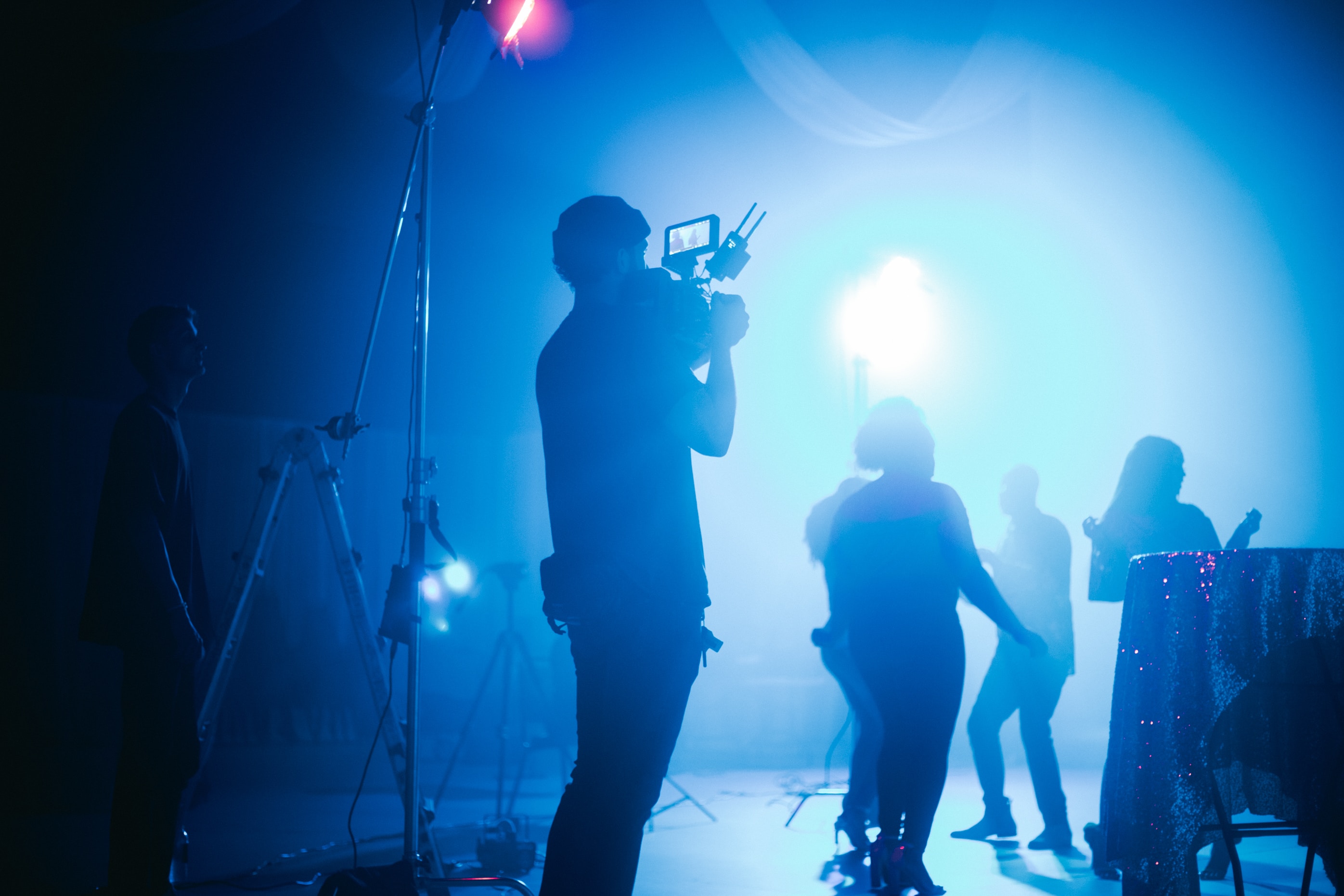
Photo by KAL VISUALS on Unsplash
Leave a Reply